SkyOps · DataOps & MLOps project · MSc Embedded AI · 2026

Following real planes from a radio signal to a landing prediction

Aircraft broadcast their position and volunteers pick it up. I turned that stream into a data platform that collects, cleans, tests and predicts.

Python · Kafka · Spark · PostgreSQL · Airflow · dbt · BigQuery · MLflow · FastAPI · Grafana · Docker · Google Cloud
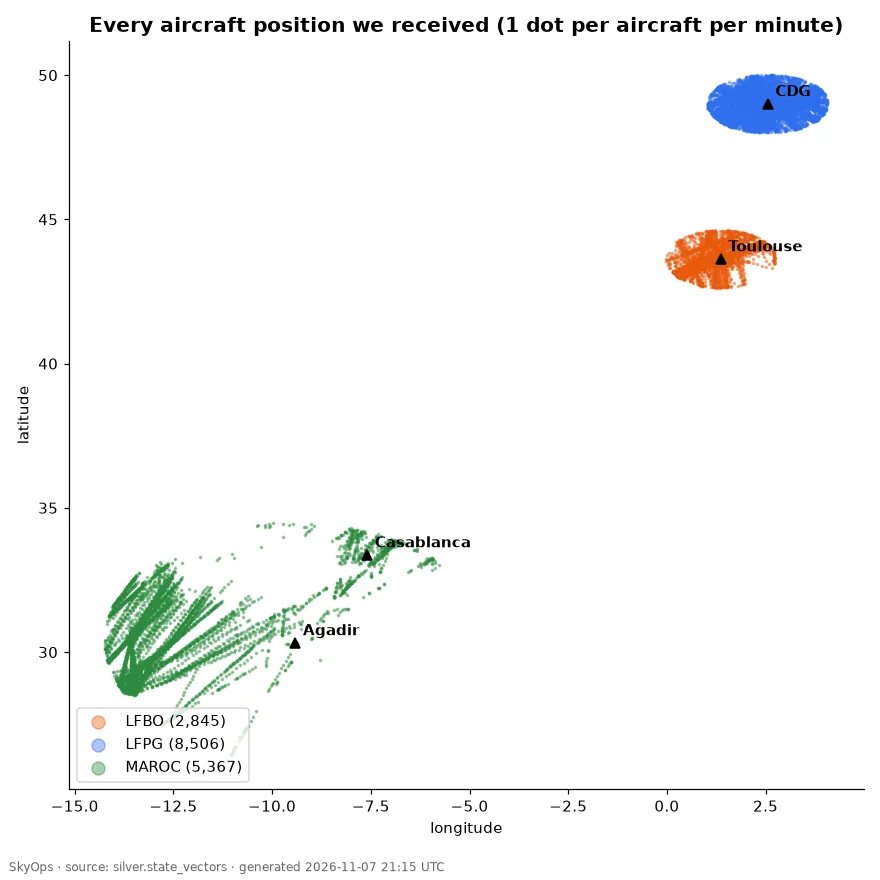
Every position received: dense over Paris and Toulouse, sparse over Morocco.

01

First, I asked whether the sky was visible

  • Called five data APIs by hand before writing any code.
  • Found 55 aircraft around Paris and 20 around Toulouse.
  • Found none within 60 nautical miles of Agadir, so Morocco became a zone planes fly through.
The warning from the live logs.

02

Then the API told me to stop

  • The first live run asked for all three zones at once.
  • The answer was HTTP 429: too many requests.
  • I spaced the calls 2 seconds apart and added a fallback source.
  • No zone failed over the next eight polls.
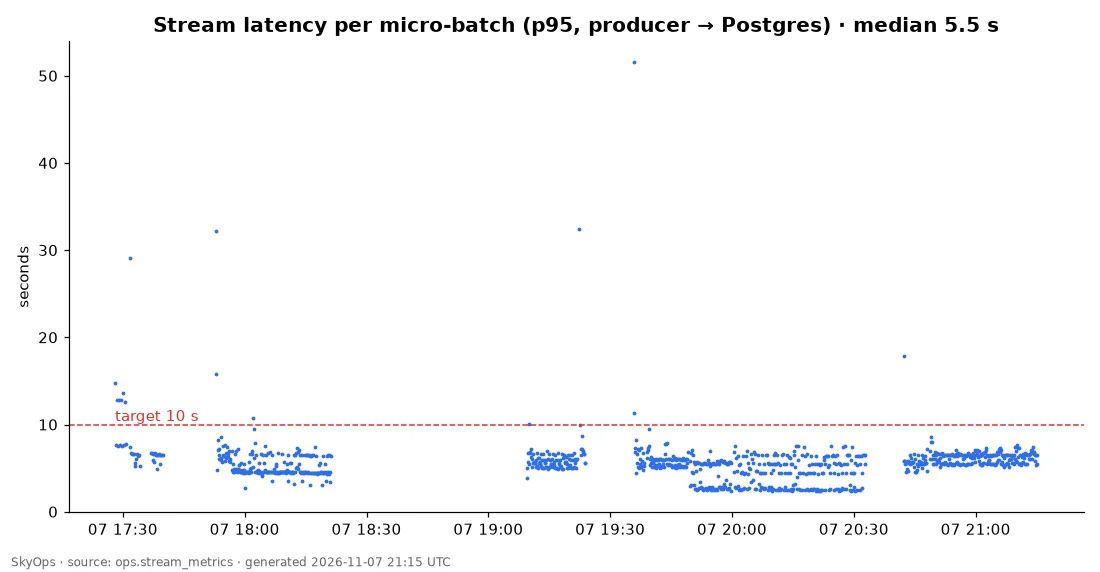
Every micro-batch across the whole day. By then the median was 5.5 s.
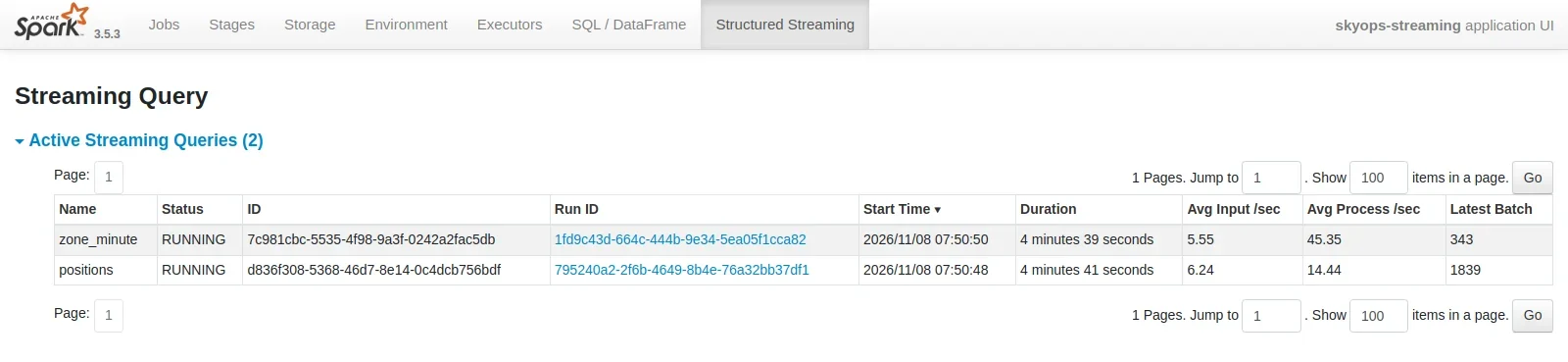
The two streaming queries in Spark.

03

Ten seconds was too slow

  • Target: under 10 s from producer to database. First measurement: 10.2 s.
  • Data waited about 4 s for the other zones.
  • I sent each zone on arrival and shortened the Spark trigger.
  • Median p95 dropped to 6.6 s.
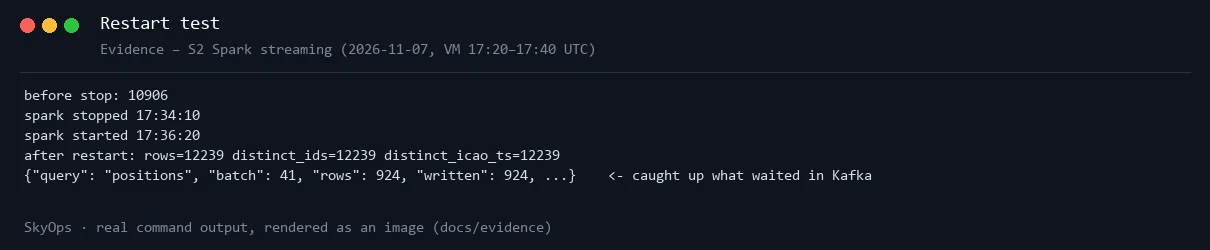
Row counts before and after the restart.

04

So I pulled the plug

  • Stopped Spark for 2 minutes while data kept arriving.
  • It caught up 924 waiting rows.
  • 12,239 rows and 12,239 unique IDs: no duplicates.
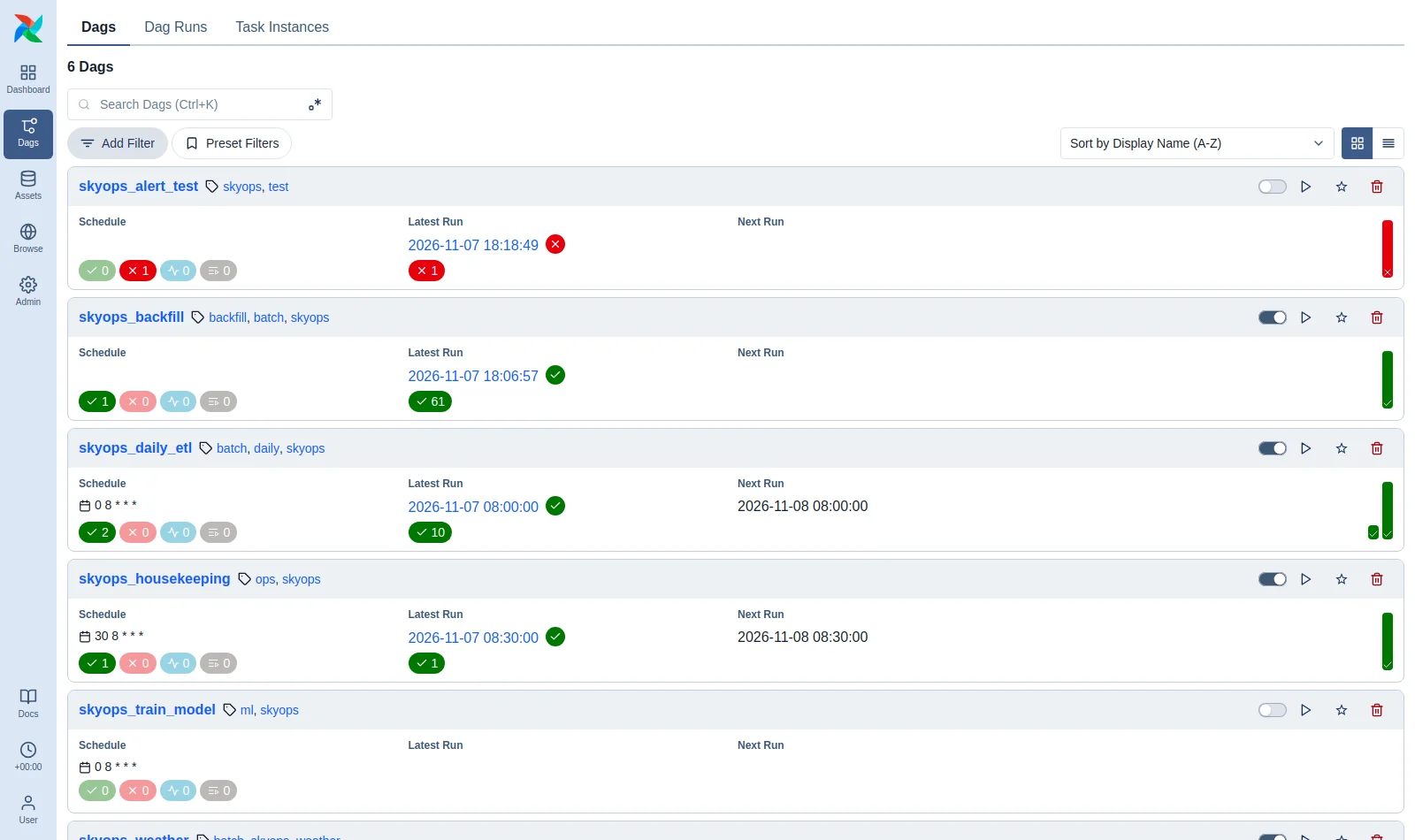
The Airflow jobs, including model training added later.
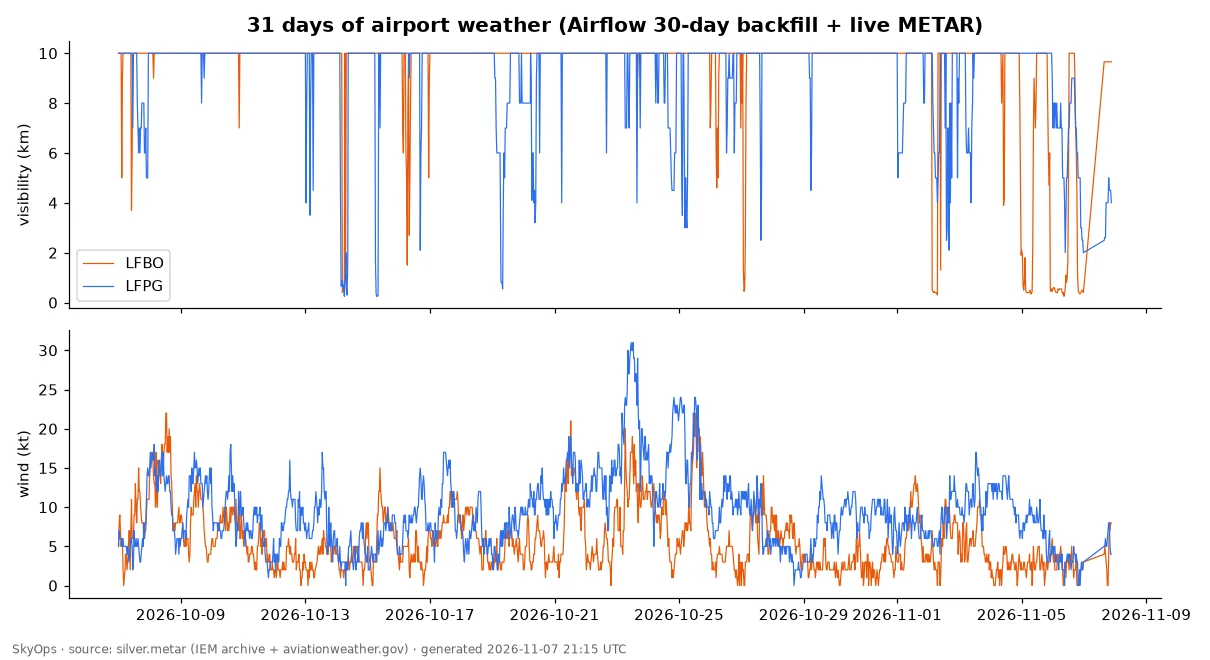
The backfilled airport weather.

05

Teaching it to run without me

  • Airflow runs weather, flights, backfills, housekeeping and alerts.
  • The weather archive refused back-to-back downloads. A pause and a retry fixed it.
  • All 30 days of history loaded.
  • Running a whole day again gave identical row counts.
Three alerts, one timestamp.
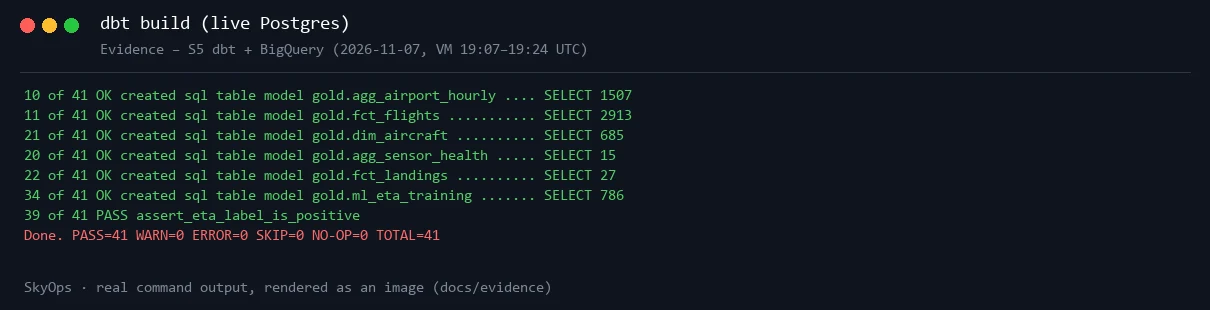
The dbt build.
The dbt build.

06

Three planes that never disappeared

  • Three aircraft lost signal in the same second.
  • That was the moment I switched my own server off.
  • The rule now checks that other aircraft were still being received.
  • dbt build afterwards: 41 of 41 pass.
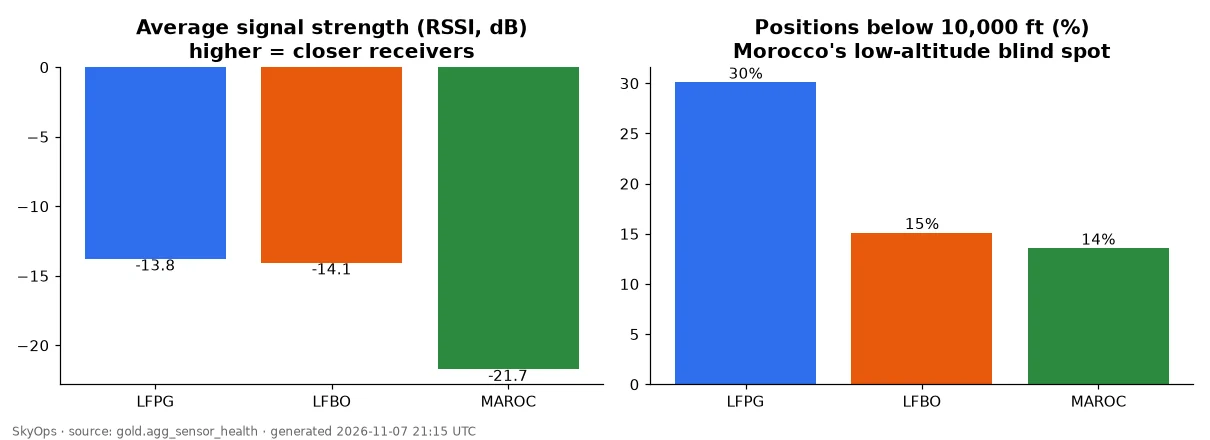
Signal strength and low-altitude coverage by zone.

07

Where the sensors go blind

  • Signals from Morocco arrive much weaker than signals from Paris.
  • Few ground receivers cover the area.
  • The platform can now measure that gap.
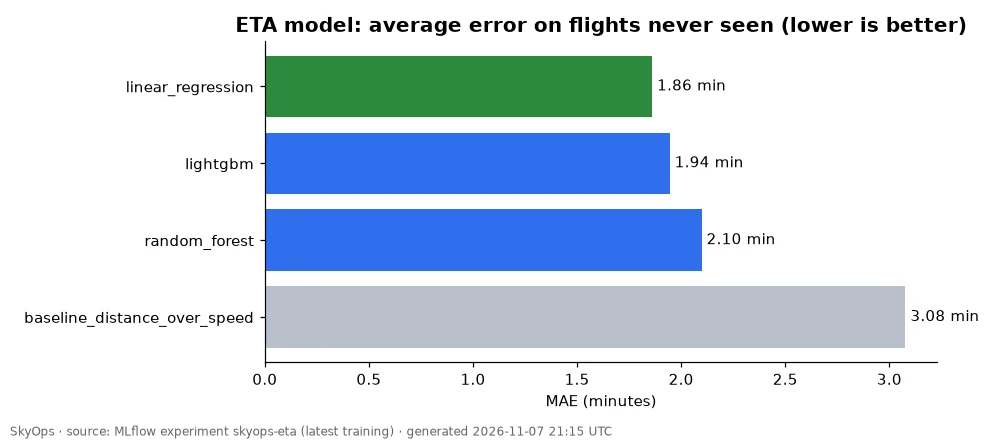
Average error on flights never seen in training.
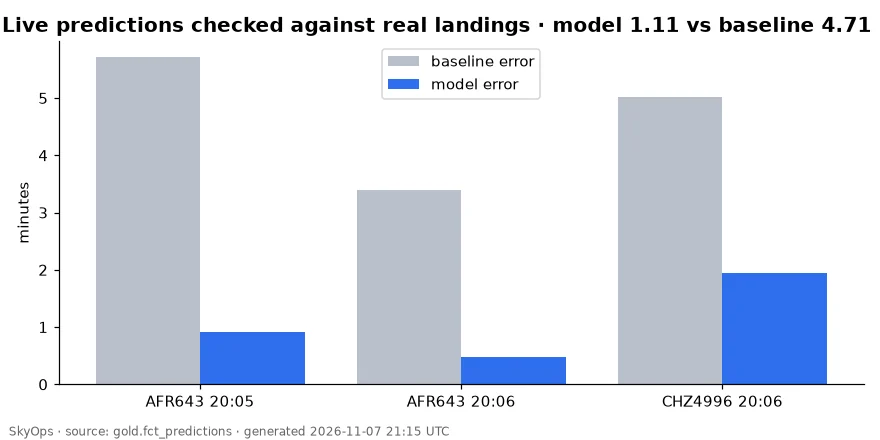
Live predictions checked against real landings.

08

Can it guess the landing?

  • Distance ÷ speed was wrong by 3.08 min on average.
  • A linear regression reached 1.86 min, beating LightGBM and a random forest.
  • Split by flight and time, so test flights were never seen in training.
  • The limit: only 11 test landings and 3 live predictions (1.11 vs 4.71 min). It needs more data.
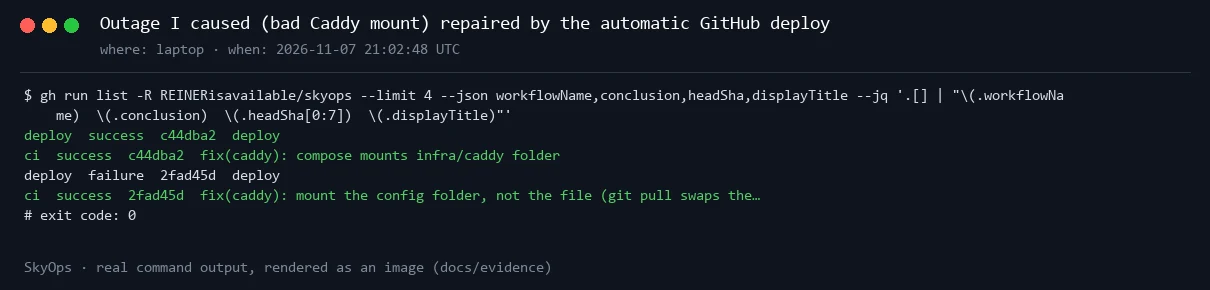
The failed deploy, followed by the one that fixed it.

09

The day I took my own site down

  • A config file was mounted on its own, so updates never reached the container.
  • A failed edit while fixing it took every public page offline.
  • I pushed the correction and the automatic deploy repaired the server, although my laptop login had expired.
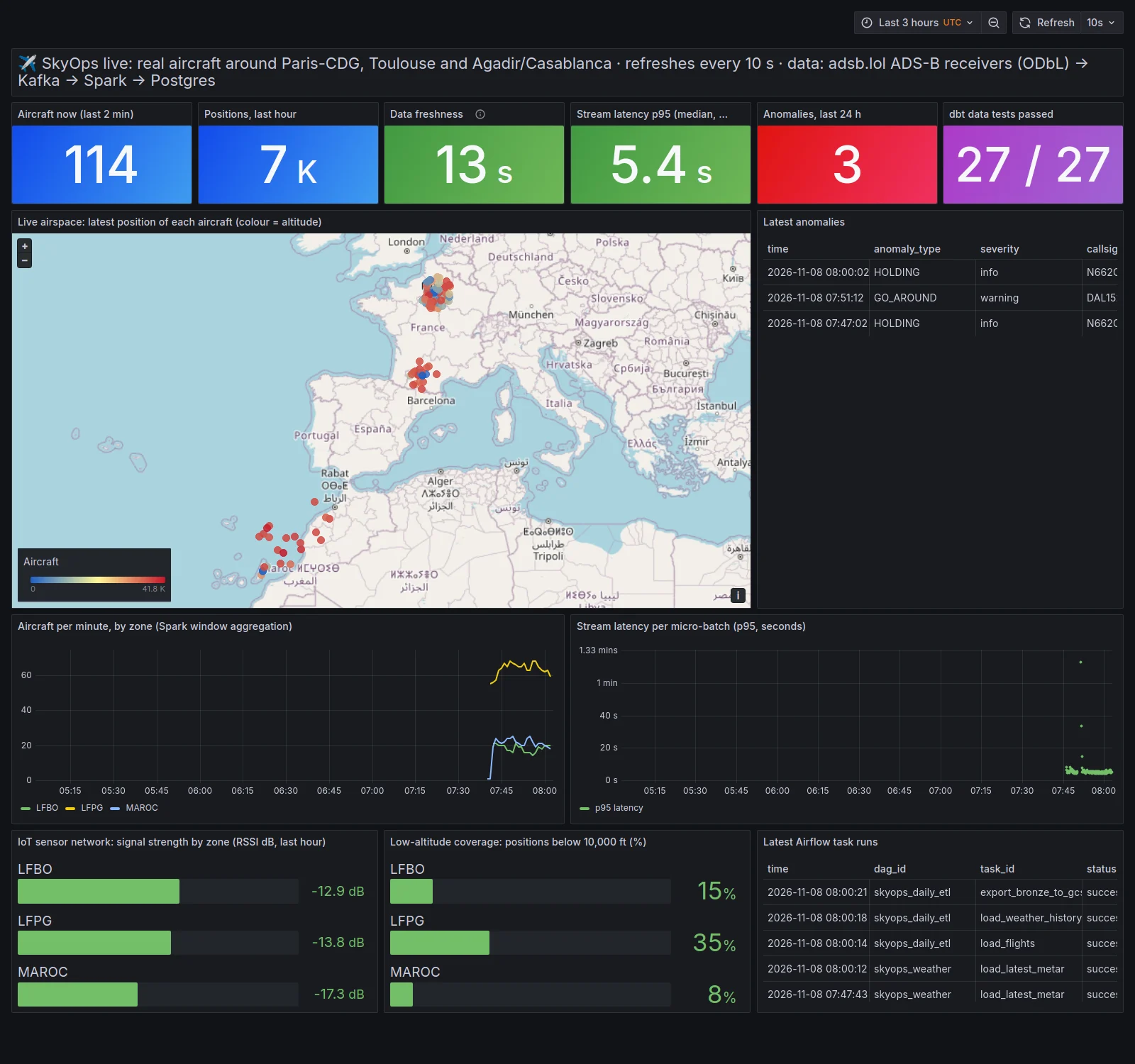
The live operations dashboard.
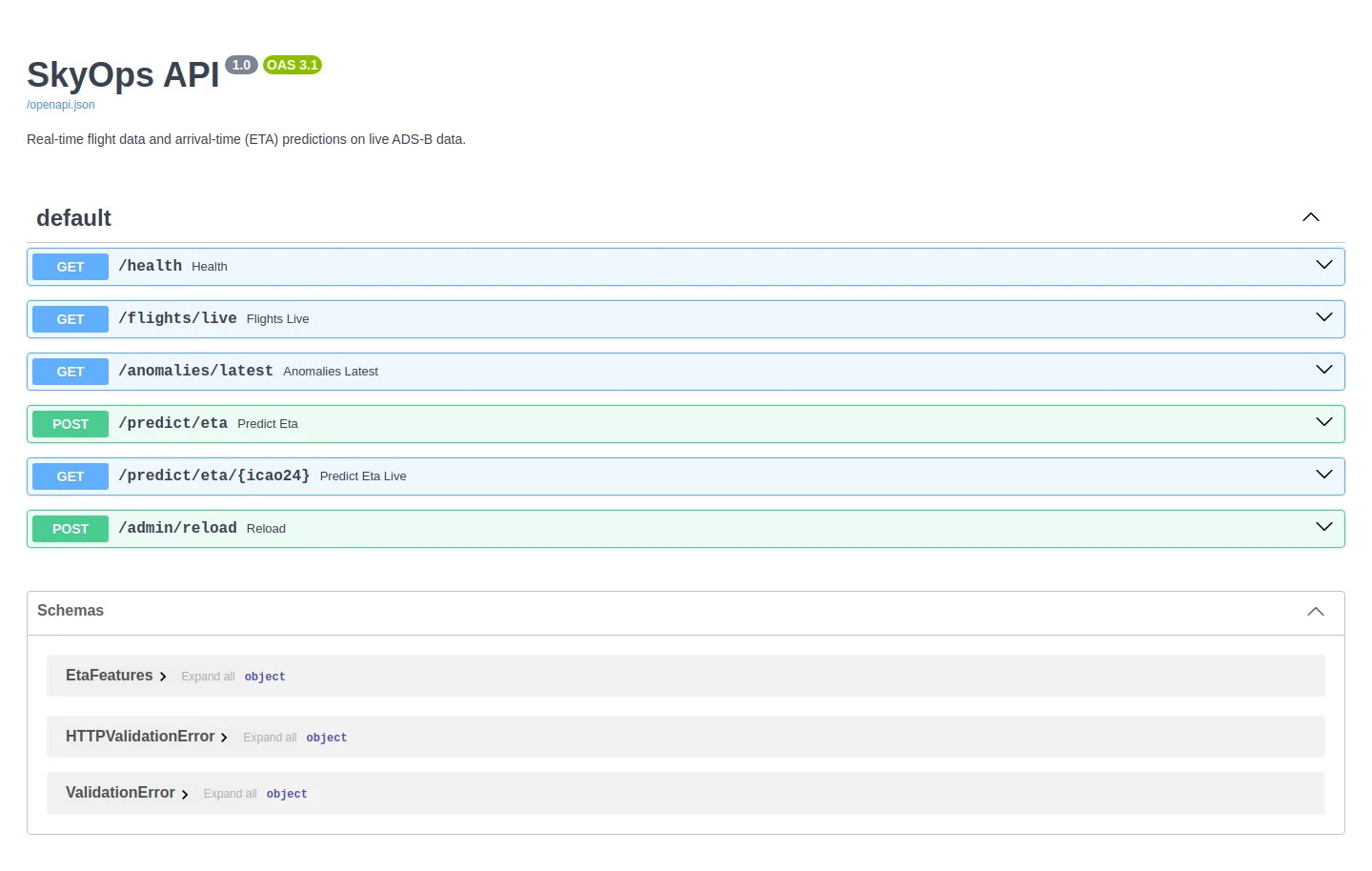
The prediction API.
The prediction API.

10

Watching it live

  • A Grafana dashboard for people, a FastAPI service for programs.
  • The dashboard’s database user can read but never write.
  • The server runs on demand to keep costs low.

Want to hear more?

Message me

Next story: Giving a warehouse a voice